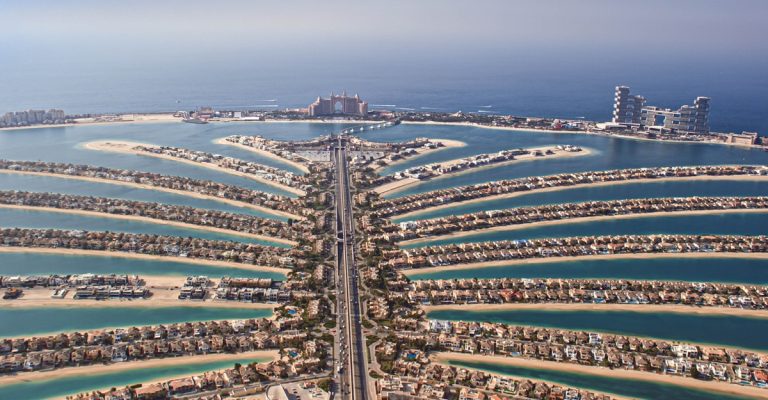
Dubai's Real Estate Dynamics: Warehouse Boom and Retail Resilience
Dubai’s commercial real estate market is experiencing a period of transformation and divergence as the city adapts to evolving economic and consumer trends. According to a recent report by Cavendish Maxwell, the first half of 2025 has been marked by contrasting performances in the retail and warehouse sectors, highlighting the city’s strategic role in global commerce and its adaptability to shifting market demands.
While the retail sector has faced challenges, particularly in off-plan sales, the warehouse market has emerged as a robust performer, driven by the city’s strategic position as a logistics hub. This dual narrative of challenge and opportunity underscores the complexity of Dubai’s real estate landscape.
Retail Sector: Navigating Challenges and Opportunities
The retail sector in Dubai has seen a nuanced performance in the first half of 2025. Despite a decline in overall sales transactions, with a 17.3% drop in volume and a 1.8% decrease in value compared to the previous year, certain segments have shown resilience. The ready retail segment, in particular, has been a bright spot, with sales volumes increasing by 13.2% and values surging by 40.1%. This trend reflects a growing preference among investors and occupiers for completed, income-generating assets as the market matures.
On the rental front, the retail leasing market has experienced mixed results. Although rental contracts have increased compared to the latter half of 2024, they still lag behind the same period last year. This is largely due to a slowdown in new leases, attributed to the limited availability of high-quality retail space. However, renewal activity has gained momentum, with contract renewals rising by 37.8% from the second half of 2024 and 1.9% from H1 2024. This indicates a cautious approach by tenants, who prefer to extend existing agreements rather than relocate amid rising rents and scarce prime retail space.
Retail rents have continued to climb, recording an 8.3% increase citywide over the past year. However, this growth is highly location-specific, with prime retail destinations such as malls and high-street retail zones benefiting the most. These areas, characterized by strong footfall and commercial viability, allow landlords to command premium pricing. In contrast, tenants in lower-footfall areas have shown resistance to rent hikes, often negotiating more favorable lease terms due to weaker demand conditions.
Warehouse Sector: A Beacon of Growth
The warehouse sector in Dubai has been a standout performer, driven by surging demand from both new entrants and existing tenants. The city recorded approximately 8,600 warehouse rental transactions in the first half of 2025, marking a 27.8% increase from H2 2024 and a striking 59.9% rise year-on-year. This surge underscores Dubai’s role as a strategic logistics and distribution hub for the region, supported by a thriving e-commerce market and resilient trade activity.
Warehouse rents have risen by 14.1% over the past 12 months, with performance varying by location. Facilities with strong connectivity to key transport corridors, proximity to ports and airports, and modern specifications have seen the highest rental growth, ranging between 10% and 20%. Conversely, older or less strategically located properties have recorded more moderate increases, often driven by spillover demand when prime assets are unavailable or exceed tenant budgets.
With limited Grade A stock available in core locations, some occupiers are exploring options in neighboring emirates such as Abu Dhabi and the Northern Emirates, where larger and more affordable logistics spaces offer compelling alternatives.
Outlook: Cautious Optimism Amid Evolving Trends
Looking ahead to the second half of 2025, the outlook for Dubai’s retail and warehouse sectors remains cautiously optimistic. Retail occupancy is strong, with key players like Emaar and Majid Al Futtaim reporting average occupancy rates of 98% across their mall portfolios in H1 2025. The sector is also welcoming new supply, with the opening of Nad Al Sheba Mall and the upcoming launch of Damac Mall.
Retail demand is expected to remain resilient, supported by population growth and increasing tourist arrivals. However, the market is likely to remain landlord-driven, with rental trends continuing to vary by location. High-traffic areas will likely maintain upward pressure on rents, while secondary markets could face pricing pressure or stability.
In the logistics sector, fundamentals remain solid. With e-commerce expected to continue expanding and international brands increasing their regional footprint, the demand for modern, well-located warehouses is likely to remain high. Rental growth may persist, especially in areas with strong infrastructure and transport links.
As Dubai continues to evolve as a global trade and retail hub, both sectors are poised for continued, but selective growth. Investors, tenants, and developers will need to adapt to changing consumer patterns, rising operational costs, and the ongoing push for quality and location advantage. The city’s ability to navigate these dynamics will be crucial in maintaining its competitive edge in the global real estate market.
Source: the original article
Related Articles
Dubai's Branded Residences Set for 80% Growth by 2030
TECOM Group Unveils $167.5 Million Innovation Hub Phase 4 in Dubai Internet City